
Gabby in Swartz Creek, MI thought the “musty basement smell” was just one of those annoying homeowner realities.
It started as something she only noticed after heavy rain. Then it became more consistent — especially when the furnace kicked on and pushed air through the house. Her basement didn’t look flooded, and nothing felt obviously wet… but the smell was strong enough that she stopped inviting people downstairs and avoided using the space unless she had to.
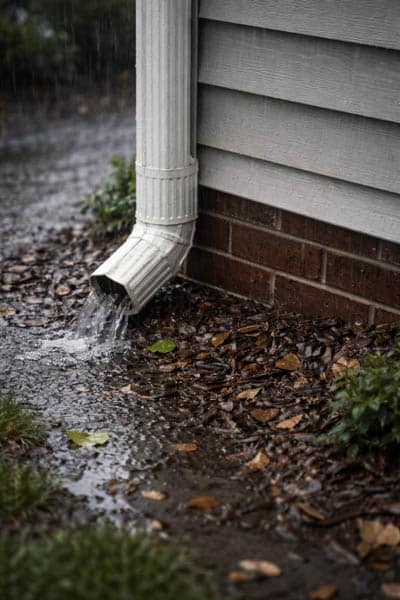
Too-short downspouts dump rainwater right at the foundation – a common cause of basement moisture and musty smells in Swartz Creek, Michigan
She did what most people do first: bought a bigger dehumidifier, cleaned everything, and tried odor products. It helped for a few days, then the smell came back.
So she scheduled a mold inspection and testing.
During the visit, the inspector didn’t just “look around.” They checked for where moisture was entering and where it was getting trapped, and two things stood out:
- Downspouts were dumping water too close to the foundation. After rain, water was collecting along the side of the house and slowly feeding moisture into the basement wall area.
- Humidity was staying too high around the rim joist area. In the colder months, warm indoor air hitting cooler surfaces created condensation, especially in the corners behind stored boxes. That damp cycle was enough to feed mildew/mold growth even though nothing looked soaked.
Testing confirmed what Gabby suspected: she didn’t have a “movie scene mold disaster,” but she did have localized mold growth in the areas that stayed damp the longest (including sections of the rim joist and a small patch of wall behind storage).

The plan was simple and practical:
Step 1: Stop the moisture at the source
- She extended the downspouts so rainwater discharged farther from the house.
-
She re-graded one trouble area so water flowed away instead of toward the foundation.
Step 2: Control the humidity properly
- She adjusted basement airflow and ran a dehumidifier set to maintain a consistent target range (instead of just “running it sometimes”).
- She stopped storing cardboard directly on the floor and moved items away from exterior walls to allow air circulation.
Step 3: Handle the mold the right way
- The affected materials that couldn’t be reliably cleaned were removed.
- The impacted areas were professionally treated so the growth didn’t keep returning once humidity was controlled.
What surprised Gabby most was how fast the outcome was once the cause was addressed. “The smell disappeared,” she said. “Not ‘mostly.’ Gone. And it stayed gone — even after rain.”
Now she uses the basement normally, doesn’t worry about guests noticing the odor, and feels confident that the space is healthier for her family.
Her bottom-line advice to other homeowners in Swartz Creek:
“If your Swartz Creek basement smells musty and it keeps coming back, don’t keep throwing dehumidifiers and sprays at it. Figure out where the moisture is coming from, fix that, and then deal with the mold. That’s what finally worked for us.”
See Is It Mold… Or Just a Damp Basement Smell?